Bitcoin
Why a high school math teacher believes Bitcoin is a long-term store of value — and what I've learned along the way.
Why I believe in Bitcoin
I'm a math teacher, so let me start with the numbers: there will only ever be 21 million bitcoin. No committee can vote to print more. No government can inflate it away. In a world where every major currency quietly loses purchasing power year after year, a money with a fixed supply is a genuinely new idea — and I think it's an important one.
I see Bitcoin as a long-term store of value, an alternative to gold for the digital age. It's volatile — nobody should pretend otherwise — but volatility and value aren't the same thing. Every transformative asset in history looked reckless to the people watching it early.
I keep my Bitcoin as its own bucket: long-term upside, held directly, separate from the income side of my portfolio. Time horizon is everything with this asset. If you're measuring in weeks, you'll get shaken out. If you're measuring in years, the fixed supply does the arguing for you.
Bitcoin basics
What it is: a decentralized digital money that runs on a global network no single company or government controls. Launched in 2009, secured by proof-of-work — real computing energy standing behind every transaction.
The fixed supply: 21 million coins, ever. New bitcoin is issued on a slowing schedule, and the last fraction will be mined around 2140. Scarcity isn't a marketing claim; it's the protocol.
How to start: buy a small amount on a reputable exchange, then learn about custody. The golden rule: not your keys, not your coins. Bitcoin held on an exchange is an IOU. Bitcoin in a wallet you control — ideally a hardware wallet, with your seed phrase written down and stored safely offline — is actually yours.
- Start small and learn as you go.
- Never share your seed phrase with anyone, ever.
- Beware of anyone promising guaranteed returns — that's the oldest scam in finance.
Bitcoin-adjacent income: STRC & SATA
Here's a corner of the market most people haven't heard of: preferred stocks issued by Bitcoin treasury companies that pay high variable dividends.
STRC ("Stretch") is Strategy's variable-rate perpetual preferred stock. It targets roughly a 12% annualized dividend on its $100 stated value, with the rate resetting periodically to keep the shares trading near par. SATA is Strive's equivalent — a similar structure, currently yielding a bit more.
The appeal is obvious: double-digit income from companies whose business is holding Bitcoin. But go in with eyes open:
- The rate is variable — it can be cut. That 12% is a target, not a promise.
- You're betting on the issuer — these dividends depend on Bitcoin treasury companies staying healthy. If Bitcoin crashes hard, the whole structure gets stressed.
- Price can trade below par — STRC has spent time under $100, which is the market pricing in exactly these risks.
- Keep them distinct — STRC is Strategy, SATA is Strive. Different companies, different risk profiles, different yields.
One idea I find compelling: taking that dividend income and converting it into Bitcoin itself — getting paid in sats, so the yield compounds in the hardest asset instead of cash. Income today, upside tomorrow.
My book on Bitcoin
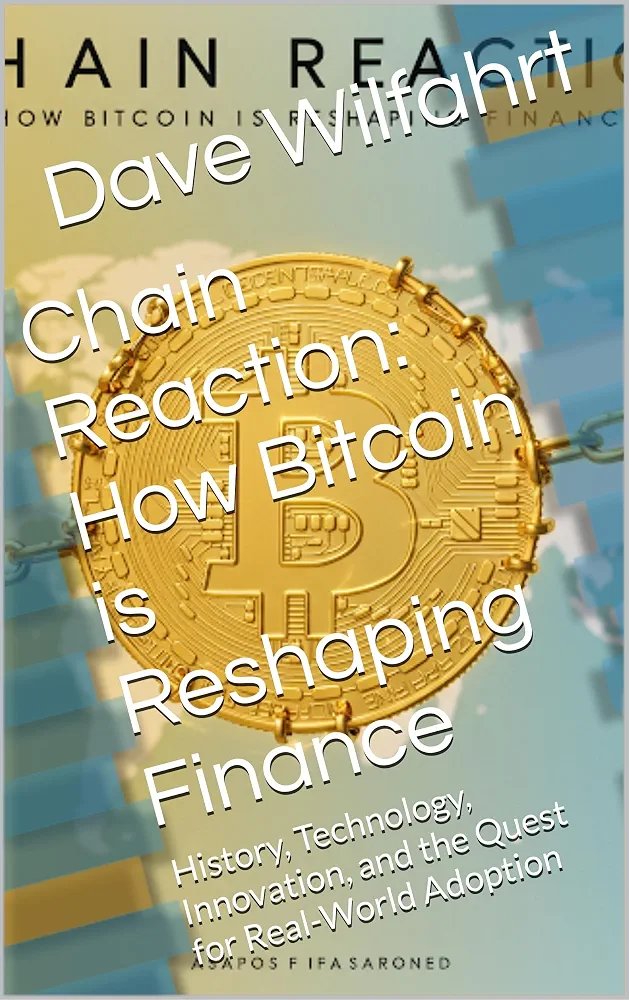
Chain Reaction: How Bitcoin is Reshaping Finance
History, technology, innovation, and the quest for real-world adoption — the full case for why Bitcoin matters, in book form.
Get it on AmazonCommon objections
"It's too volatile."
True — and irrelevant to the thesis if your time horizon is years, not weeks. Volatility is the price of admission for an asset still being adopted. The supply schedule doesn't care about the price chart.
"It's a bubble."
It's been called that at $100, $1,000, $10,000, and beyond. Bubbles don't typically survive four boom-bust cycles across 15+ years and come back stronger each time. That pattern looks more like adoption.
"It wastes energy."
Bitcoin uses a lot of energy — that's what secures the network. The serious question is what kind: a growing share is stranded, hydro, or otherwise wasted energy that would go unused. And compared to the energy footprint of the entire banking system it aims to supplement, the comparison is more interesting than critics admit.
"Am I too late?"
Over 19 million of the 21 million bitcoin are already mined, but global adoption is still early — most people on earth own none. "Too late" has been wrong at every price so far. That said: never invest money you can't afford to lose, in anything.